Return of the Sturgeon has attracted considerable attention and become a catalyst for other initiatives along the river. Some of these have led to degree projects.
Return of the Sturgeon has attracted considerable attention and become a catalyst for other initiatives along the river. Some of these have led to degree projects. Their overall aim is to investigate the health of the Göta älv, how the Atlantic sturgeon's return affects the river, and how this knowledge can ultimately inform restoration measures. Here are two degree projects to explore. Enjoy!
In 2026, the sturgeon project is developing rearing methods, preparing to relocate Arken and tracking more fish with acoustic telemetry. International knowledge exchange is essential.
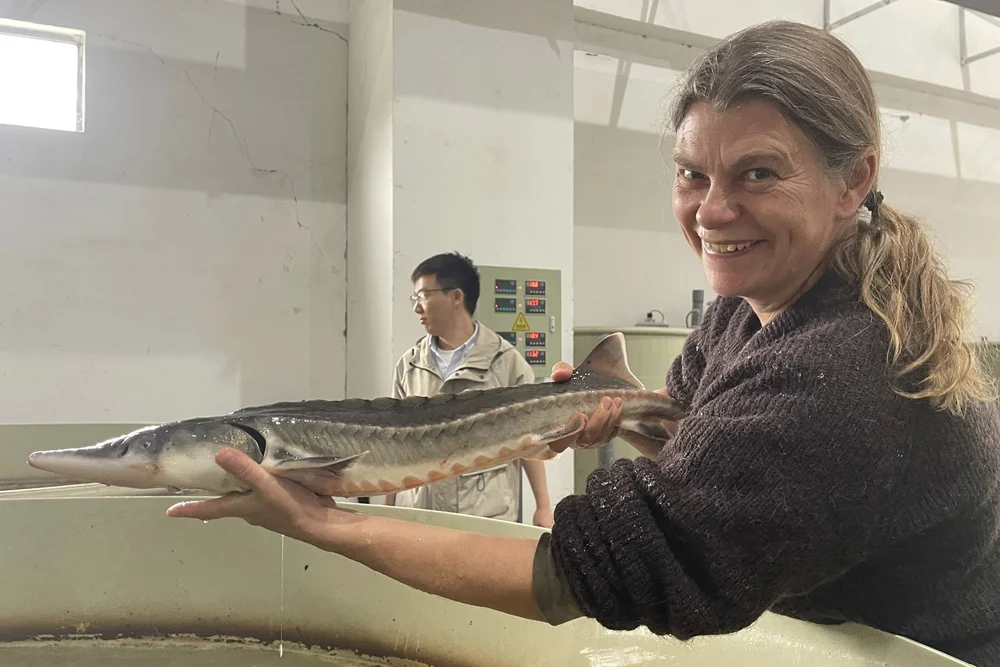
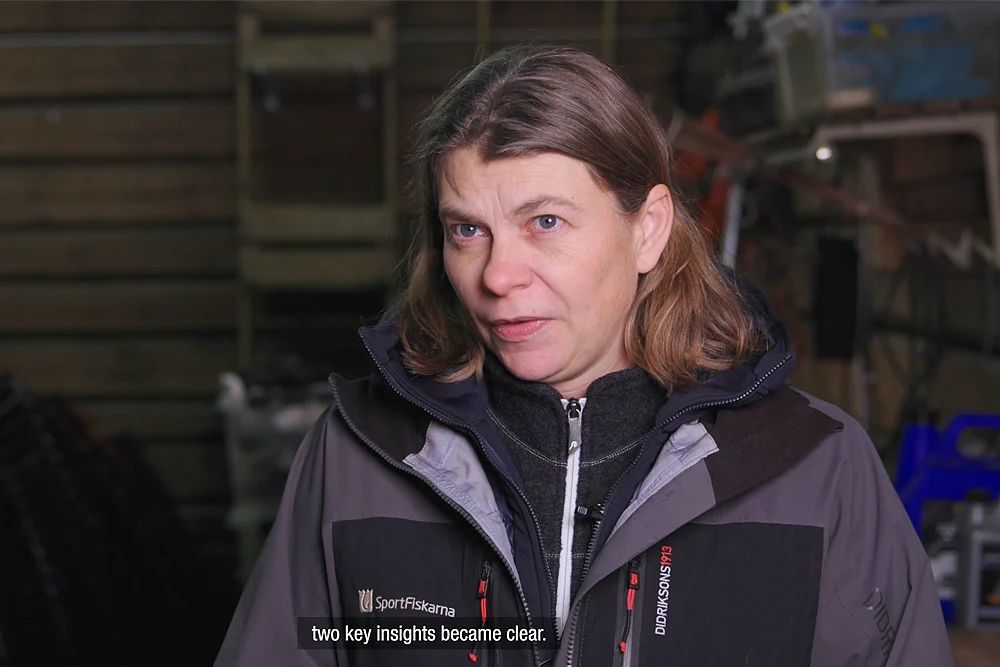
In October 2025, Sportfiskarna's project manager Linnéa Jägrud attended a conference in Yichang, China. Organised by the World Sturgeon Conservation Society, the conference brought together the world's leading sturgeon experts.
Plans for the sturgeon project in 2026
Attending this kind of symposium is valuable, and Linnéa returned with several important pieces of the puzzle that the Swedish sturgeon project had been missing. These included new studies from North America showing how important it is for sturgeon to encounter water from their home river at a very early stage in their life cycle. The studies therefore support locating rearing facilities on the riverbank. To make this possible, Sportfiskarna applied for funding together with Kungälv and Lilla Edet municipalities. The application was submitted to an ongoing sturgeon programme on the Danube, and funding was awarded in spring 2026. This launched an intensive effort to prepare Arken for relocation to its new site in Kungälv. We aim to complete the move in summer 2026 so that Arken can welcome newly hatched sturgeon in late July or early August.
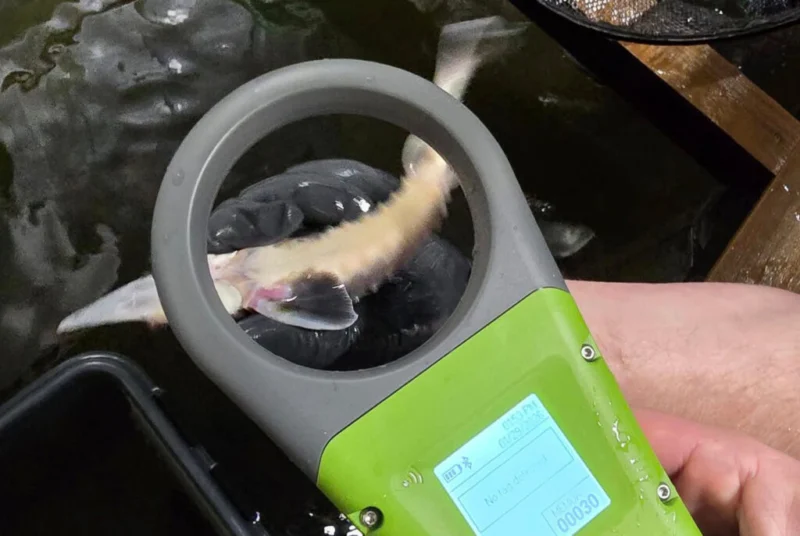
273 sturgeon have been fitted with passive transponders known as PIT tags.
Our staff, Rikard and Linnéa, have completed training in correct fish-tagging techniques. These skills were used during a winter study testing whether sturgeon grow faster when swimming in a current generated by a pump. The initial results are very promising: the fish grow better when they can swim in a current. Exactly why is the next question. They may build more muscle, feel more comfortable or disturb each other less while feeding – or it may be a combination. This work forms part of Wild Out West, a project involving Sportfiskarna, Gothenburg Botanical Garden and Nordens Ark that aims to find new ways to rewild ecosystems.
We will again fit sturgeon with acoustic telemetry tags this year, in mid-May. The aim of the 2026 tagging programme is to determine whether migration patterns and survival differ between fish kept for longer in cold water and those kept for a shorter time in warm water. The fish will then be released into the Göta älv at Lilla Edet. Afterwards, we will clean out Arken and prepare it for the move to Kungälv.
The first analyses of migration patterns among acoustically tagged sturgeon are in, and they show a high survival rate.
90% of the sturgeon released in 2024 survived their first year. Their behaviour varies: some swim very long distances, some like to explore and others remain more local. After a full year, 27% were still in the river, which is considered a good indication that it contains enough insects to feed the juveniles.
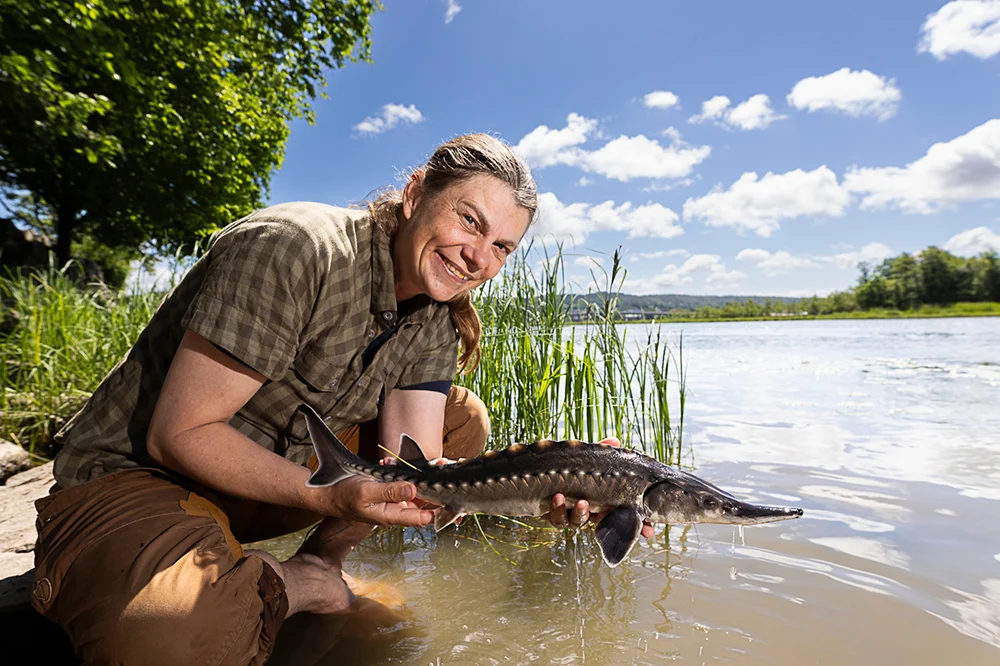
Gustav Hellström (SLU) and Linnéa Jägrud fit a sturgeon with an acoustic telemetry transmitter.
The story of stolen sturgeon reveals the fish’s value in the 16th century. We trace a privateer’s catch through the royal accounts.
In 1565, Stockholm's treasury recorded receiving nine barrels and three quarter-barrels of pickled sturgeon from Lasse Olsson, captain of a privateering ship. He had acquired the sturgeon by capturing Danish ships.
test
Stolen sturgeon in the royal archives
This happened during the Northern Seven Years' War between Sweden and Denmark, from 1563 to 1570. The sturgeon's origin is therefore uncertain, but the cargo probably came from Denmark or may have been purchased in German towns. At the time, Halland, Skåne, Blekinge and Gotland were part of Denmark, along with Norway and Bohuslän.
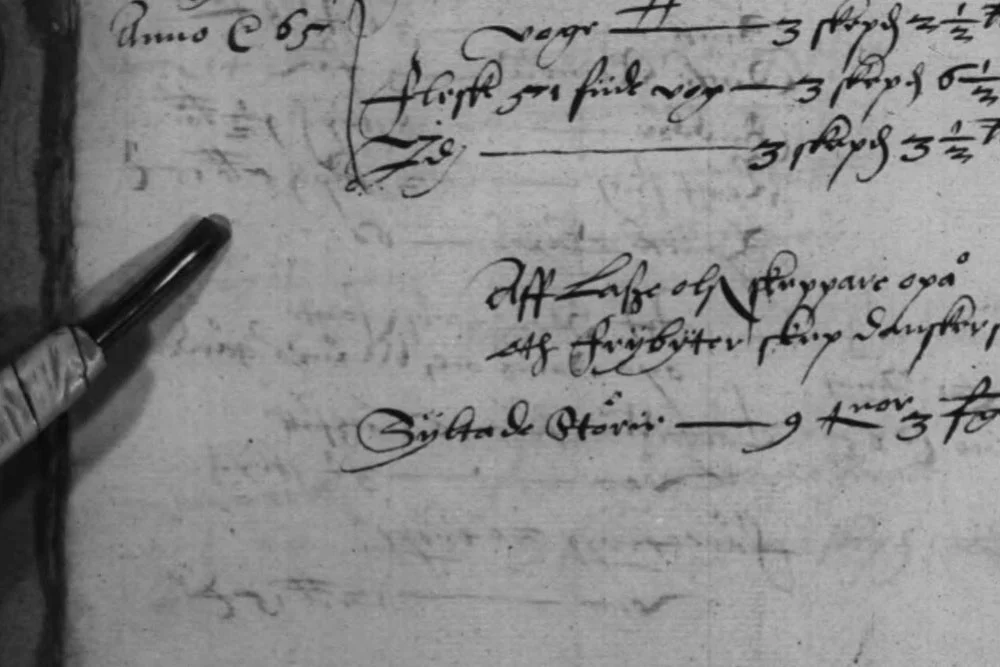
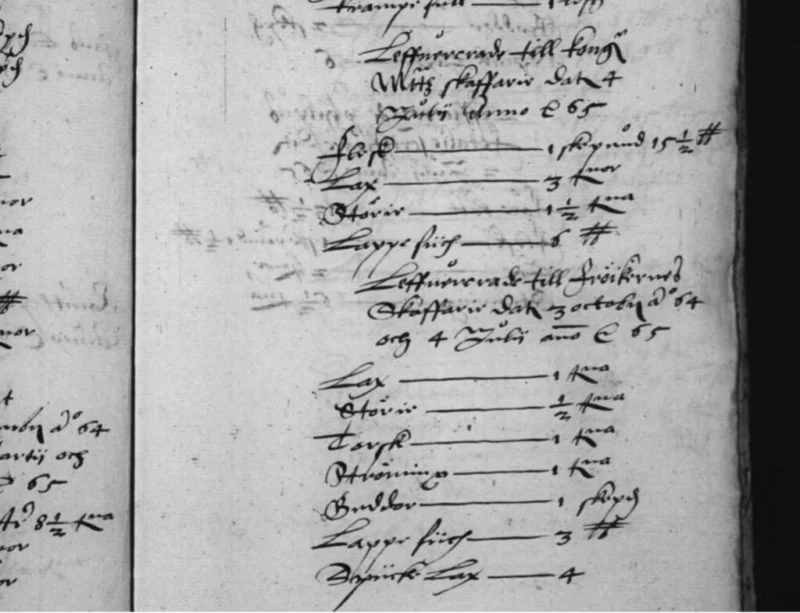
This record shows the receipt of sturgeon at Stockholm Castle in 1565: “From Lasse Olsson, captain of a privateering ship. Danish ships – pickled sturgeon – nine barrels and three quarter-barrels.”
The pickled sturgeon was consumed over two years. In 1565, one and a half barrels were sent to Stockholm Castle on 20 September, one and a half to His Majesty's pantry on 4 July, and half a barrel to the princesses' pantry on the same day. The princesses were probably Sofia and Elisabeth Vasa, Gustav Vasa's unmarried daughters. Both were in their late teens and would later become potential marriage partners in peace negotiations. The delivery to their pantry was signed for by their steward, who acknowledged only the half-barrel of sturgeon.
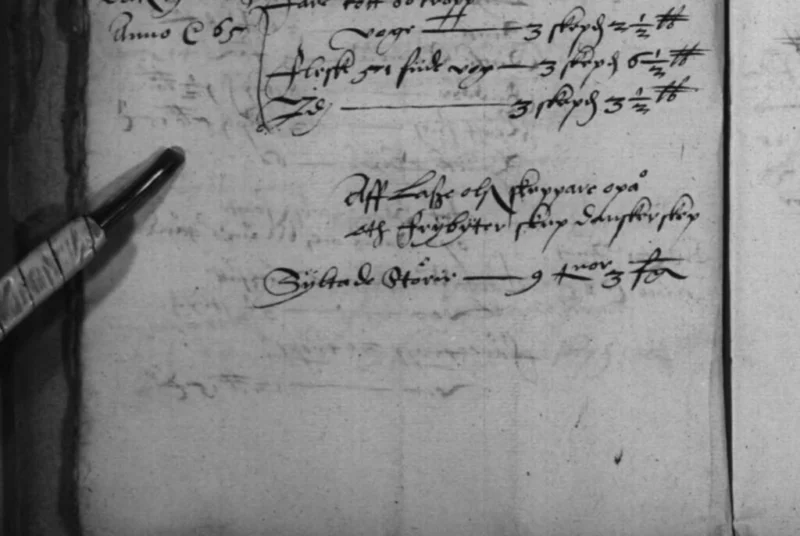
This record shows deliveries of sturgeon to different recipients. At the top: delivery to His Majesty's pantry on 4 July 1565, including one and a half barrels of sturgeon alongside pork, salmon and whitefish described using an outdated term in the original record. Below: deliveries to the princesses' pantry on 3 October 1564 and 4 July 1565. Half a barrel of sturgeon appears on the second line from the top.
In total, three and a half barrels of pickled sturgeon were issued in 1565, leaving six barrels and one quarter-barrel for 1566. The reduction from three quarter-barrels to one probably means that one of the half-barrel deliveries actually consisted of two quarter-barrels, or that two quarter-barrels were opened to fill a half-barrel.
The remaining barrels were consumed in 1566. Påvel, the kitchen clerk, signed for four and a half barrels for His Majesty's pantry on 29 July, and one and a half barrels were delivered to Stockholm Castle on 28 September: six barrels in total. The half-barrel quantities suggest that barrels had been opened and their contents divided between two smaller containers.
Only one quarter-barrel of pickled sturgeon remained. This was recorded as outstanding after “Karl Simonsson unlawfully took one quarter-barrel of sturgeon from the castle”.
We have not been able to establish who Karl Simonsson was. His name does not appear among the bailiffs, captains or others working at the castle. One possibility is that he supplied goods to a provincial bailiff and took the sturgeon when collecting goods for his employer. Recording it as “outstanding” suggests that Karl, or his employer, was probably charged its value as a debt.
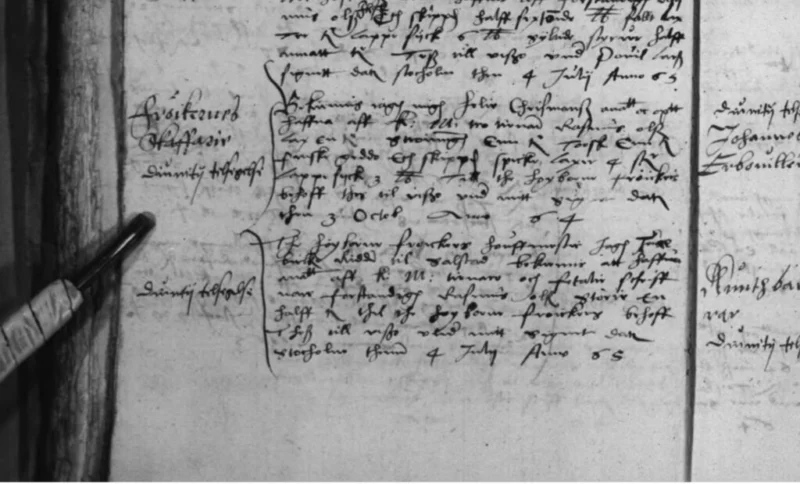
This is what a receipt for goods issued looks like. The left-hand margin reads “The princesses' pantry”. A bracket marks two withdrawals for the princesses. The lower entry, dated 4 July 1565, shows that their steward collected, among other things, half a barrel of sturgeon for their use. The word for sturgeon, “Störie”, is on the fourth line from the bottom, second word from the right.
The sturgeon project expanded in 2025 with rearing at Arken and Graalen, new releases and reports of the fish’s movements.
test
Rearing and monitoring in 2025
In 2025, the focus is on scaling up the project, securing further funding and setting the direction for the coming years. Here is a summary of the summer.
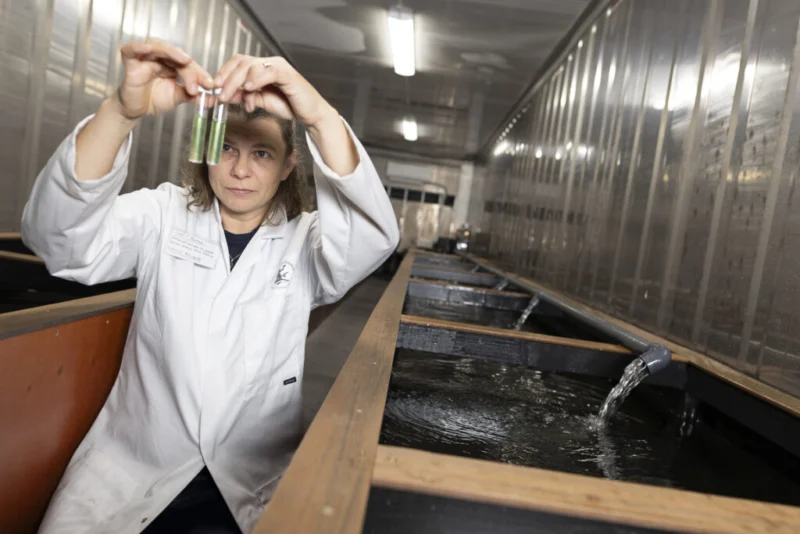
Arken and Graalen – home to thousands of Atlantic sturgeon The first 95 fish are nowhere near enough to establish a population, so we need to house sturgeon over winter for release in spring. The organisations have chosen mobile units that can be relocated when needed. Two shipping containers were fitted out: Arken, built and run by Sportfiskarna in Gothenburg, and Graalen, built and run by Miljöteknik i Väst, with Dan Calderon playing a key role. Arken is an insulated 40-foot container with two large raceways running along its sides, equipped with pumps, filters, pipes and water treatment. Graalen has a similar design. Getting these systems to work has been challenging, so winter 2024–25 was spent building expertise and making improvements. Together, Arken and Graalen successfully raised around 140 fish to a size suitable for Floy tags and acoustic telemetry. They were tagged in May 2025 and released into the river in June. All acoustically tagged fish were released using the soft-release cage at Lilla Edet. During summer, further Floy-tagged sturgeon were released during visits by funders and at public events. A larger batch of young sturgeon arrived in late August, and several thousand were released directly into the river in accordance with the permits. Some will remain in Arken and Graalen over winter, growing in warmer indoor water to form the basis of the 2026 releases.
Marathon swimmers and valuable bycatch reports The first reliable bycatch reports arrived in spring 2025. These are an important way for the public and commercial fishers to help us understand the Atlantic sturgeon's movements and life cycle. The fish is fully protected and must be released, but reading the four digits on its yellow Floy tag and, if possible, weighing and measuring it provides valuable information. By August 2025, we had received these reports: three off Vinga, three along the Bohuslän coast, two in Norway, one in Aalborg, Denmark, and four along the southern Halland coast. The longest-distance swimmer was one of the six fish released at the official event in Kungälv on 18 June 2024. It was found in Farsund, Norway, on 15 May, having gained two kilos and grown 15 cm! Another fish left the cage at Lilla Edet and was found in Ängelholm just four weeks later. Most survived the accidental capture and swam on. A picture is gradually emerging, though still fragmentary: Atlantic sturgeon travel far and wide and like to move! Some remain in the river for a long time, while others head straight out to sea.
Biologist and filmmaker Jonas Stenström has made a film about the sturgeon project. In eight and a half minutes, it offers an entertaining, informative and engaging introduction to the project.
Join a fast-paced adventure led by Linnéa Jägrud and Dan Calderon. The film, Störens Återkomst (Return of the Sturgeon), shares its name with the project, which has grown into one of Sweden's most widely noticed nature conservation and rewilding initiatives. In eight and a half minutes, it offers a compact, informative and entertaining introduction to the project.
In summer 2024, a total of 95 Atlantic sturgeon were released into the Göta älv and Nordre älv. All were in good health as they dived into the river's depths. A soft-release approach was used: groups of 26 fish first spent just over a day in a submerged cage before it was opened, allowing them to swim out when ready.
test
How the release took place
Studies suggest that soft release improves survival, so we decided to use this approach here too. Most fish left from Lilla Edet, while a small number were released in the Nordre älv at Kungälv, mainly during the event on 18 June 2024.
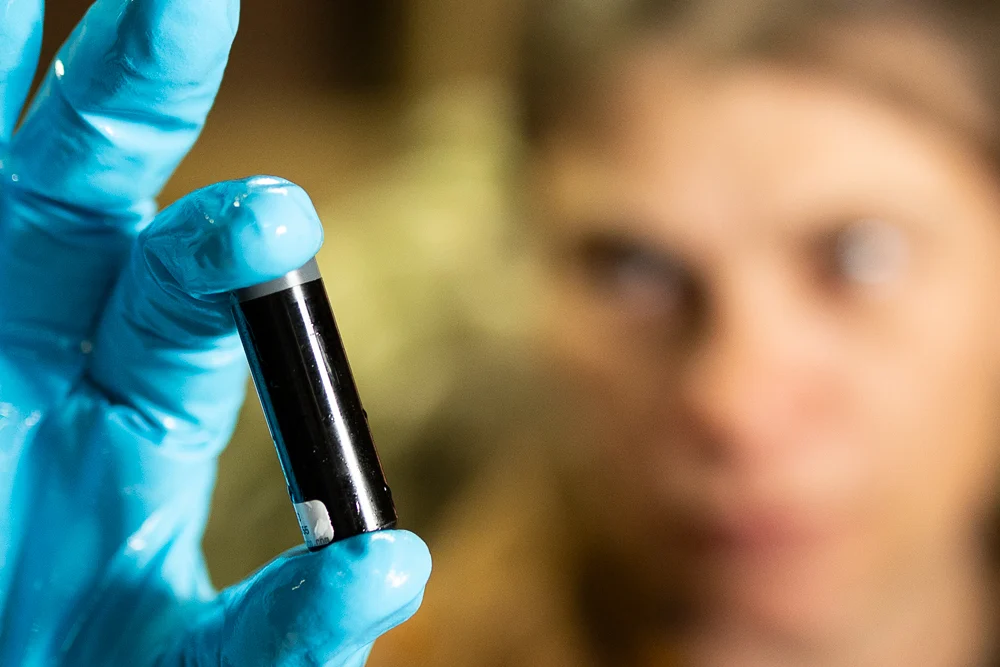
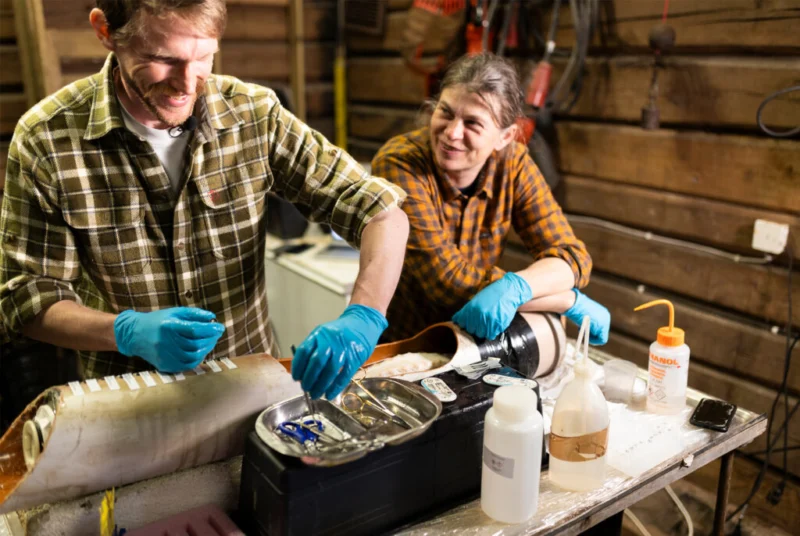
All the fish arrived on 24 April from the Mecklenburg-Vorpommern Research Center for Agriculture and Fisheries in Rostock, northern Germany. There were 100 fish, and all survived the journey in good health. During an intensive week in May, 92 were fitted with acoustic telemetry transmitters. The fish is anaesthetised, a small incision is made in its abdomen, and a transmitter about the size of an AA battery is carefully inserted. The incision is closed with surgical thread and the fish is placed in a recovery tank. The fish were monitored for a couple of days afterwards, and all were confirmed to be doing well again.
The sturgeon carry both an acoustic telemetry transmitter and a conventional Floy tag. Photo: Mathias Arnham.
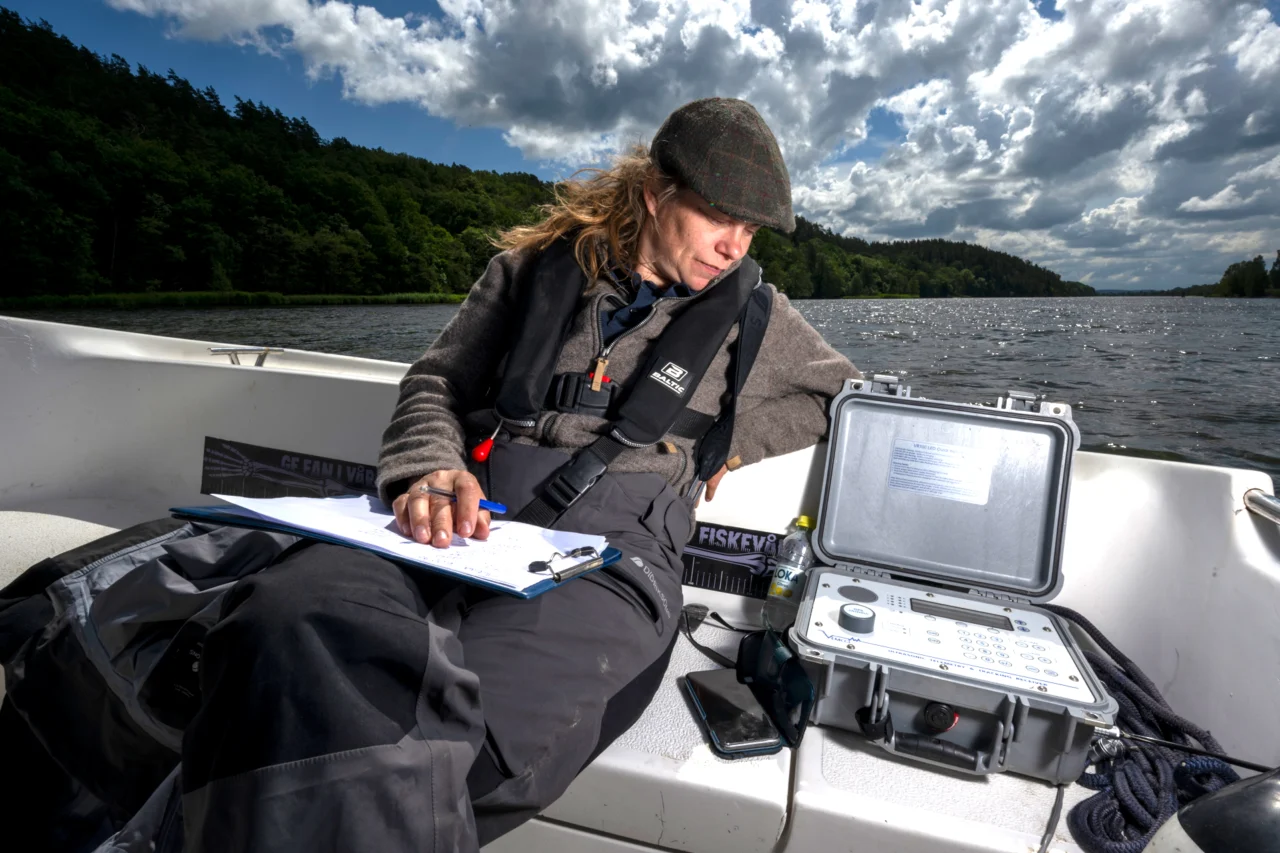
24 receivers were placed along the river from Lilla Edet to Gothenburg, through Kungälv to the Nordre älv estuary, and along the coast. Positioned near the bottom, they receive signals from the fish's implanted transmitters, allowing us to track movement patterns. This network of transmitters and receivers is called acoustic telemetry. It is reliable, but depends on recovering the receivers to download the information they have collected.
Acoustic telemetry can answer several important questions. Which route do the fish choose? How many survive? How long do they remain in the river? How do they behave as they approach salt water? This information can help guide river restoration and the conservation of valuable habitats.
Vi använder cookies för att se till att ge dig den bästa upplevelsen av webbplatsen. Om du fortsätter att använda webbplatsen så är det bra om du godkänner det.