About the project
BACK TO THE GÖTA ÄLVReintroducing Atlantic sturgeon
Reintroducing Atlantic sturgeon to the Göta älv is grounded in historical evidence, research and collaboration. This is how the project began.
The project is run and led by the Swedish Anglers Association. Dan Calderon first proposed bringing sturgeon back to the Göta älv in 2013. Initial meetings were held with interested organisations in the Gothenburg area, but the major breakthrough did not come until 2016.
From idea to reintroduction
The main cause of the species’ disappearance was prolonged overfishing. With a piece of the ecosystem missing, we are now working to bring this important species back. Its effects on the river will be studied in collaboration with researchers. Its activity on the riverbed helps oxygenate the sediment, potentially benefiting the growth and abundance of small bottom-dwelling animals. Large sturgeon can also serve as hosts for other species, such as the sea lamprey, which is itself highly threatened.
That was when Kenneth Lundin at the Gothenburg Natural History Museum searched the museum’s collections thoroughly. After a few dusty hours in the vaults, he emerged smiling with three preserved juvenile Atlantic sturgeon. All had been caught in the Göta älv in the late 19th century and provide the strongest evidence of spawning. As far as is known, the Göta älv is the only Swedish river with such clear evidence of sturgeon spawning. Other large rivers also hosted sturgeon, but it is unknown whether they reproduced there.
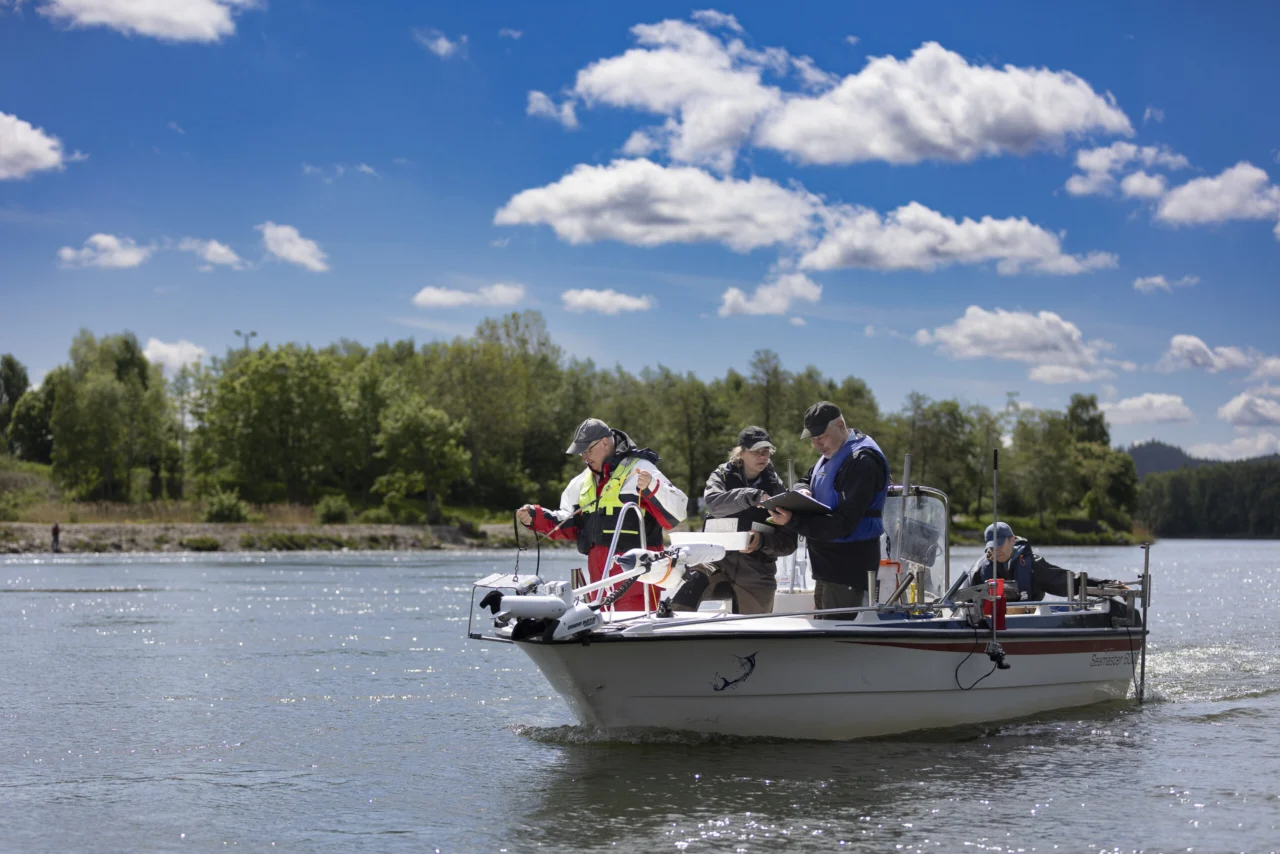
The work gained new momentum in 2022 when Linnéa Jägrud joined the Swedish Anglers Association. The Göta älv was surveyed to assess future spawning and nursery conditions for Atlantic sturgeon. German experts visiting to help with the survey examined the museum specimens morphologically. Three large potential spawning sites were identified, together capable of supporting hundreds of spawning females. Nursery habitats are thought to exist in the shallow to moderately deep parts of the main channels of the Göta älv and Nordre älv.
Environmental DNA samples were taken to check whether any remnant sturgeon population had survived the past hundred years. A positive result would have been extraordinary and would have required a complete rethink. No sturgeon were detected.
An application for permission to reintroduce the species was therefore submitted on 7 March 2023. A wide range of organisations supported the application, giving the initiative legitimacy and weight.