The sturgeon project in 2026
The sturgeon around the worldThe sturgeon project in 2026
In 2026, the sturgeon project is developing rearing methods, preparing to relocate Arken and tracking more fish with acoustic telemetry. International knowledge exchange is essential.
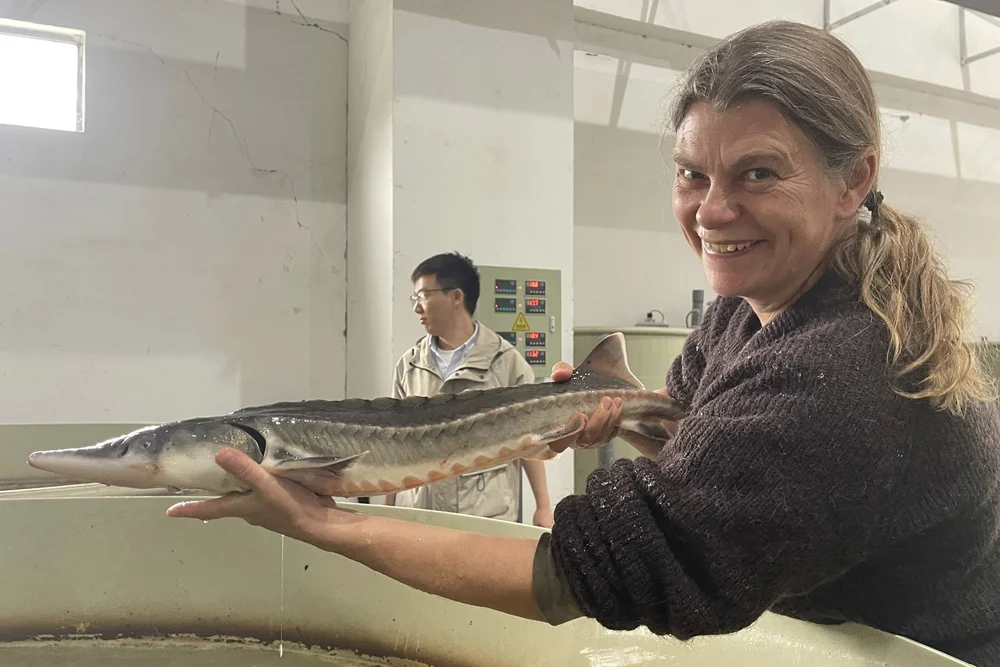
In October 2025, Sportfiskarna’s project manager Linnéa Jägrud attended a conference in Yichang, China. Organised by the World Sturgeon Conservation Society, the conference brought together the world’s leading sturgeon experts.
Plans for the sturgeon project in 2026
Attending this kind of symposium is valuable, and Linnéa returned with several important pieces of the puzzle that the Swedish sturgeon project had been missing. These included new studies from North America showing how important it is for sturgeon to encounter water from their home river at a very early stage in their life cycle. The studies therefore support locating rearing facilities on the riverbank. To make this possible, Sportfiskarna applied for funding together with Kungälv and Lilla Edet municipalities. The application was submitted to an ongoing sturgeon programme on the Danube, and funding was awarded in spring 2026. This launched an intensive effort to prepare Arken for relocation to its new site in Kungälv. We aim to complete the move in summer 2026 so that Arken can welcome newly hatched sturgeon in late July or early August.
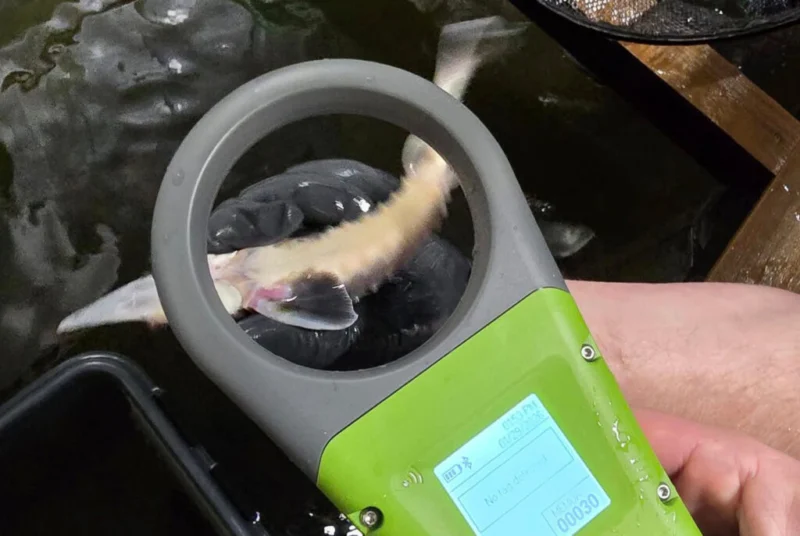
273 sturgeon have been fitted with passive transponders known as PIT tags.
Our staff, Rikard and Linnéa, have completed training in correct fish-tagging techniques. These skills were used during a winter study testing whether sturgeon grow faster when swimming in a current generated by a pump. The initial results are very promising: the fish grow better when they can swim in a current. Exactly why is the next question. They may build more muscle, feel more comfortable or disturb each other less while feeding – or it may be a combination. This work forms part of Wild Out West, a project involving Sportfiskarna, Gothenburg Botanical Garden and Nordens Ark that aims to find new ways to rewild ecosystems.
We will again fit sturgeon with acoustic telemetry tags this year, in mid-May. The aim of the 2026 tagging programme is to determine whether migration patterns and survival differ between fish kept for longer in cold water and those kept for a shorter time in warm water. The fish will then be released into the Göta älv at Lilla Edet. Afterwards, we will clean out Arken and prepare it for the move to Kungälv.