The species
Acipenser oxyrinchusAtlantic sturgeon – a prehistoric giant
The fish we work with is the Atlantic sturgeon (Acipenser oxyrinchus). It is a fascinating species that can grow very large and live for many years. Historical records suggest it can live for 120–140 years, exceed 500 cm in length and weigh more than 600 kg.
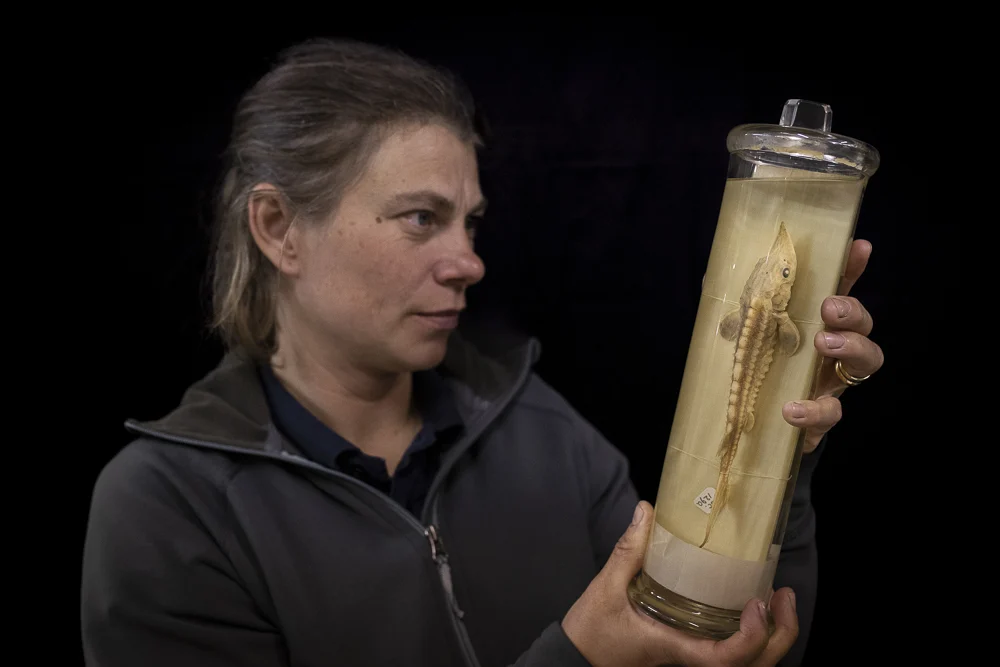
The Atlantic sturgeon’s life cycle and history
Atlantic sturgeon and European sturgeon were long thought to be the same fish. Only around 2010 were they identified as two distinct species, both of which had occurred in north-western Europe. Some hybridisation has taken place, but Atlantic sturgeon was clearly the dominant species in Sweden. It occurred in most major rivers of north-western Europe and throughout the Baltic Sea region.
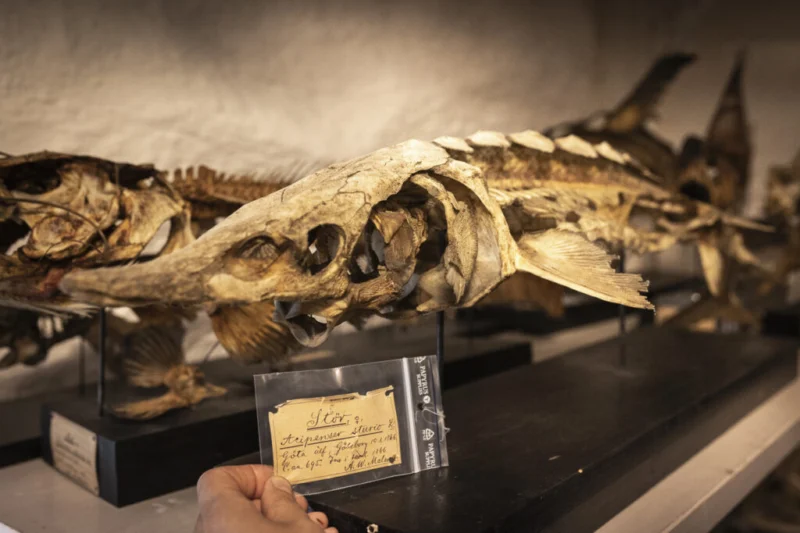
It is unknown whether the species spawned in Sweden’s northernmost rivers or whether the water was too cold. Atlantic sturgeon prefer warmth and spawn in summer in fast-flowing, well-oxygenated fresh water. The eggs hatch and the young remain upriver until they are large and strong enough to tolerate salt. They gradually adapt to seawater, living in the estuary before becoming fully coastal. Throughout their lives, they feed on bottom-dwelling animals, with prey size largely determined by the size of their mouths. When sexually mature, in their late teens, they swim upriver to spawn and then return to the coast. This cycle continues, and the older and larger a female becomes, the more eggs she can carry.