Cultural heritage
Shifting baselinesShifting baselines – the Atlantic sturgeon’s disappearance
The story of the Atlantic sturgeon’s disappearance is a good example of what researchers call “shifting baselines”. This happens when nature has changed so much that people forget it has not always looked the way it does today.
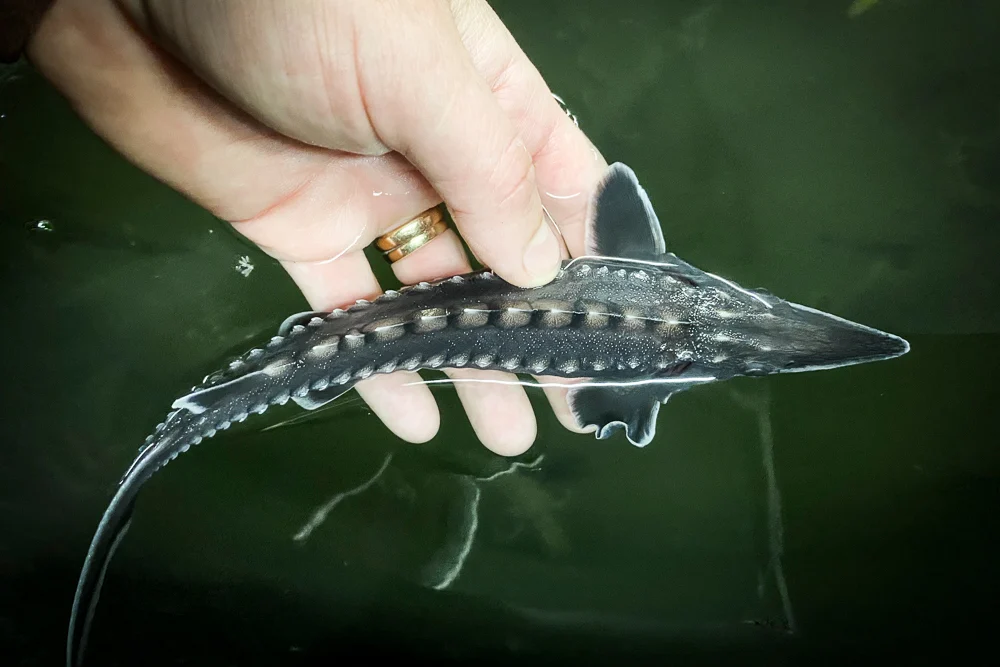
Traces of the Atlantic sturgeon
Sturgeon once lived here, but we wiped them out so long ago that we forgot they existed. As a result, today’s large rivers without sturgeon are mistakenly treated as the natural baseline.
For many centuries, the sturgeon’s migration upriver offered a valuable and sought-after source of food. It arrived regularly each year, swam slowly, was large and tasted good, making it a potential food source for people living along the river until the early Middle Ages. Although difficult to catch, the effort was worthwhile because a single fish could provide food for a long time. Sturgeon remains have been found in archaeological excavations at Gamla Lödöse, where the fish’s bony plates were used in jewellery and combs.
A story survives in a statement written by a priest in 1432. It tells of a fisherman who once caught a sturgeon in the Göta älv. The fisherman, Svenung of Torp, took his catch to Bohus Fortress, where King Magnus Eriksson was said to be visiting. Svenung presented the magnificent fish to the king. When the king offered to pay him in cloth, the fisherman instead asked for a letter in his favour. The king wrote it, and Svenung took it to Lady Kristina of Haneström. The document granted him the right to fish and set nets downstream of the great falls at Lilla Edet. This clever move probably made life much easier for him and his descendants, as they could now count on catching salmon every year.
By the mid-19th century, the fish was probably already rare after hundreds of years of fishing. When the Gothenburg Natural History Museum’s dedicated staff collected juveniles and adults in the 1880s, the population was nearing its end. The last fish on Sweden’s west coast was landed at Grebbestad in 1947.
We therefore wiped out a species that had played a major part in our history: a bearer of cultural heritage that can grow enormous and live for many years, yet reproduces so slowly that it was easily overfished. Not only did we wipe it out; we also forgot it had existed. A double betrayal. It is time to put that right!
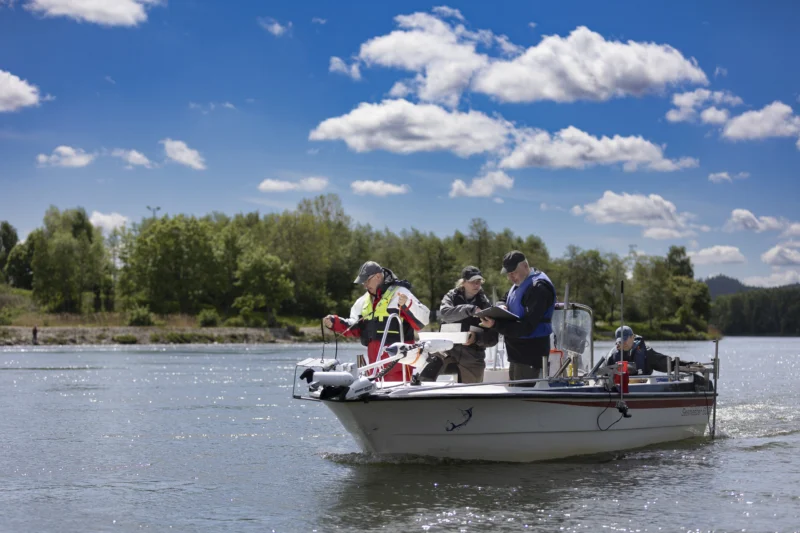
Over the past year, historical sturgeon records have been mapped. Atlantic sturgeon occurred regularly along Sweden’s entire coast and in the lower reaches of several major rivers. To build an overview, Joacim Näslund of SLU Aqua searched the National Library of Sweden’s digital newspaper database for sturgeon reports. He found around a hundred catches reported in local newspapers from the early 19th century onwards. To extend the picture further back, Sportfiskarna commissioned an archaeologist to investigate older documents in the National Archives. These revealed sturgeon catches dating back to the early 15th century. Sturgeon was a prized fish, often sent to the royal castle to be eaten. Individual fish can be traced, as kitchen clerks carefully recorded how they were divided and where they were sent. There are many fascinating stories, including the account below of how privateer Lasse Olsson acquired a cargo of sturgeon.
The findings are being compiled into a scientific paper expected to be published later in 2026. Some rivers stand out for more frequent sturgeon records. The Göta älv tops the list, while the Ångermanälven, Dalälven, Motala ström and Lagan also feature prominently in different ways. If preserved young sturgeon are found with a recorded capture location and year, this could support reintroduction in more rivers. So look in cupboards, storerooms and basements at old libraries, local history museums, former schools and similar places!