Releasing Atlantic sturgeon
Atlantic sturgeon return to the Göta älvAtlantic sturgeon release in 2024
In summer 2024, a total of 95 Atlantic sturgeon were released into the Göta älv and Nordre älv. All were in good health as they dived into the river’s depths. A soft-release approach was used: groups of 26 fish first spent just over a day in a submerged cage before it was opened, allowing them to swim out when ready.
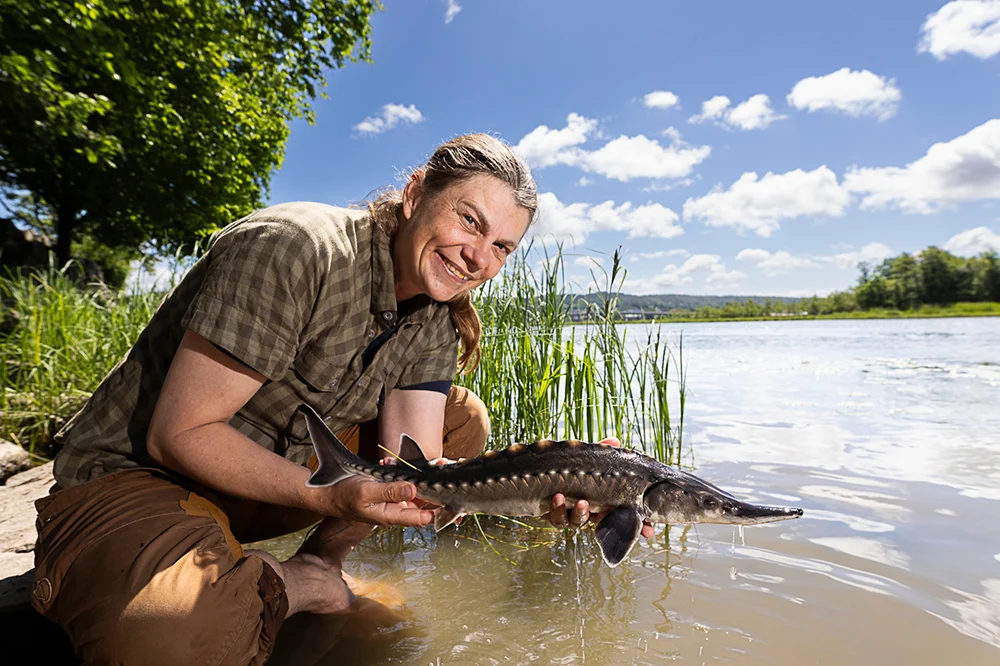
How the release took place
Studies suggest that soft release improves survival, so we decided to use this approach here too. Most fish left from Lilla Edet, while a small number were released in the Nordre älv at Kungälv, mainly during the event on 18 June 2024.
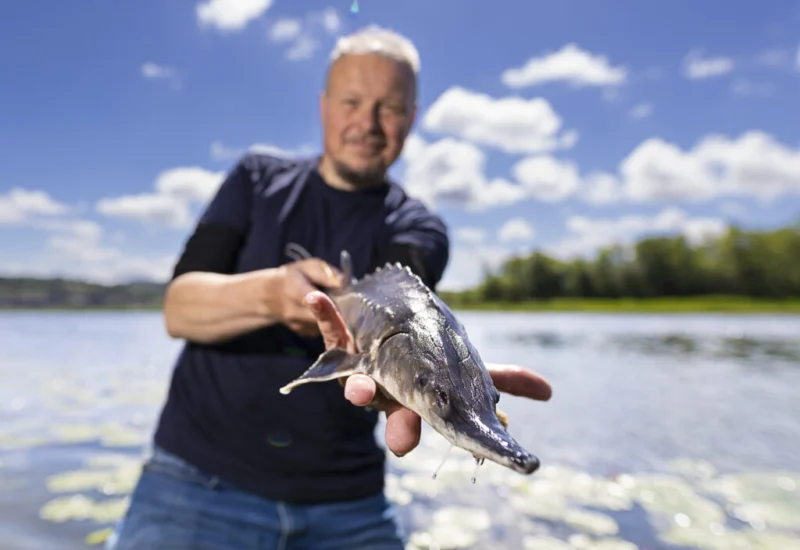
All the fish arrived on 24 April from the Mecklenburg-Vorpommern Research Center for Agriculture and Fisheries in Rostock, northern Germany. There were 100 fish, and all survived the journey in good health. During an intensive week in May, 92 were fitted with acoustic telemetry transmitters. The fish is anaesthetised, a small incision is made in its abdomen, and a transmitter about the size of an AA battery is carefully inserted. The incision is closed with surgical thread and the fish is placed in a recovery tank. The fish were monitored for a couple of days afterwards, and all were confirmed to be doing well again.
24 receivers were placed along the river from Lilla Edet to Gothenburg, through Kungälv to the Nordre älv estuary, and along the coast. Positioned near the bottom, they receive signals from the fish’s implanted transmitters, allowing us to track movement patterns. This network of transmitters and receivers is called acoustic telemetry. It is reliable, but depends on recovering the receivers to download the information they have collected.
Acoustic telemetry can answer several important questions. Which route do the fish choose? How many survive? How long do they remain in the river? How do they behave as they approach salt water? This information can help guide river restoration and the conservation of valuable habitats.